

Ready Possession vs Under-Construction Flats: Compare Cost, Risks and Benefits

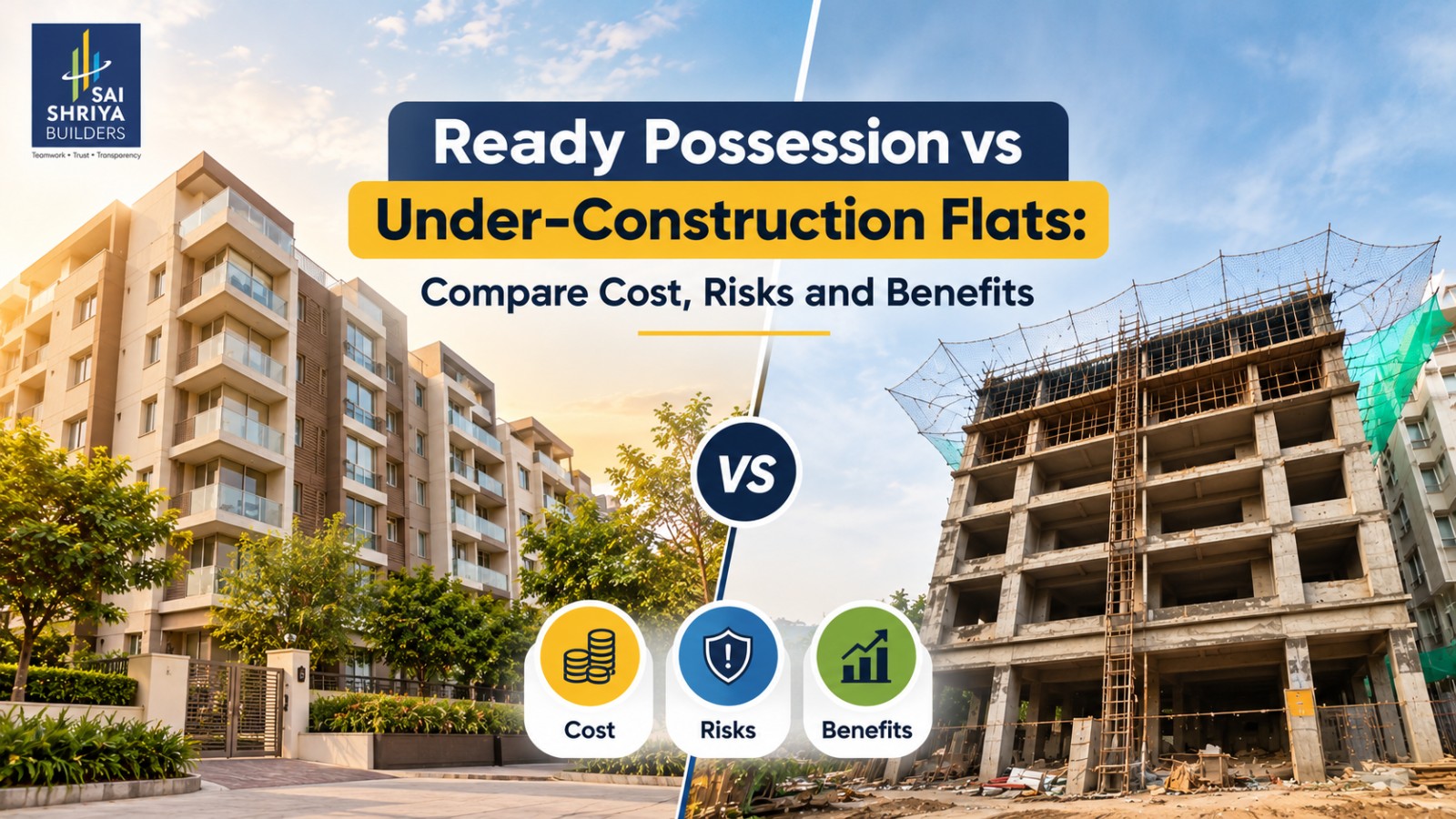
Buying a home is a major financial commitment, and choosing the right property involves more than comparing prices. One of the first decisions homebuyers face is whether to purchase a ready-possession flat or invest in an under-construction property. Both options offer distinct advantages, but the right choice depends on your budget, financial stability, lifestyle, and how soon you need to move.
Ready-possession flats allow buyers to inspect the completed property before making a decision and move in once the purchase formalities are complete. Under-construction flats, on the other hand, may offer different pricing opportunities, construction-linked payment schedules, and a wider selection of available apartments, depending on the project stage.
For people comparing residential properties in Pune, understanding the differences in cost, risk, and convenience can help make the buying process more straightforward. Here is a detailed comparison to help you decide which option suits your needs.
1. What Is a Ready-Possession Flat?
A ready-possession flat is a completed apartment that is available for occupation, subject to the required approvals and legal formalities. Buyers can inspect the actual property, assess its layout, check the quality of construction, and understand the surrounding environment before committing.
One of the biggest advantages is certainty. You can evaluate the completed apartment instead of relying entirely on floor plans, sample flats, brochures, or construction updates.
Ready-possession properties are particularly suitable for families who need to relocate quickly, buyers moving out of rented accommodation, and individuals who prefer to avoid construction-related uncertainty.
However, buyers should not assume that every completed property is legally ready for occupation. Verify the applicable Occupancy Certificate (OC), title documents, sanctioned plans, and other relevant approvals before purchasing.
2. What Is an Under-Construction Flat?
An under-construction flat is a property that is still being developed and has not yet reached the stage at which possession can be handed over for occupation.
Depending on the project and the stage of construction, buyers may be able to select from available apartments, choose preferred floor levels, and follow a payment schedule linked to construction milestones.
Some under-construction properties may have lower initial prices than comparable completed apartments, although this depends on the location, developer, market demand, and project specifications.
The main consideration is the waiting period. Buyers need to plan their finances around the expected possession date and account for the possibility of construction delays.
Before booking, check the project’s MahaRERA registration and disclosures, construction progress, approved plans, agreement terms, and declared completion timeline.
3. Cost Comparison: Which Option Fits Your Budget?
The total cost of buying a home includes more than the advertised property price. Stamp duty, registration charges, GST where applicable, parking, maintenance deposits, interiors, and other expenses can affect your final budget.
Ready-possession flats
A completed apartment offers greater visibility into the immediate costs of ownership. You can inspect the property and estimate expenses related to repairs, furniture, appliances, and interiors.
GST generally does not apply to the sale of a completed property where the entire consideration is received after the applicable completion certificate or first occupation, whichever is earlier, subject to the relevant tax rules. Other transaction costs, including stamp duty and registration, may still apply.
Under-construction flats
An under-construction property may offer a lower entry price in some projects. Payments may also be distributed across construction milestones, depending on the agreement.
However, GST generally applies to under-construction residential property sales unless a specific exemption applies. Buyers should also account for possible rent during construction, home-loan interest, interiors after possession, and any additional charges disclosed in the agreement.
The better financial choice is the property with the more suitable total cost, not necessarily the lower advertised price. Compare equivalent apartments using the same carpet area, specifications, location, and amenities before deciding.
4. Possession Timeline and Convenience
The possession timeline can significantly influence which property is right for you.
A ready-possession flat is generally more convenient if you need a home immediately. Once the necessary legal and financial formalities are completed, you can plan your move without waiting for the building to be constructed.
This can be especially useful for families relocating for work, people whose rental agreements are ending, or buyers who want to avoid prolonged uncertainty.
Under-construction flats require more patience. Although developers declare expected possession dates, construction can be affected by approval-related issues, labour availability, material costs, funding, or other unforeseen circumstances.
If you choose an under-construction property, review the possession date and contractual delay provisions carefully. Consider whether you can afford to continue paying rent or other accommodation expenses if the project takes longer than expected.
5. Construction Quality and Property Inspection
Another important difference is the extent to which you can inspect the actual apartment before purchasing.
With a ready-possession flat, you can examine the finished walls, flooring, doors, windows, ventilation, plumbing fixtures, electrical fittings, and common areas. You can also assess the natural light, noise levels, building maintenance, and overall surroundings.
Consider hiring a qualified property inspector or technical professional to identify defects that may not be immediately visible.
With an under-construction flat, buyers generally depend on approved plans, specifications, sample apartments, construction updates, and the developer’s commitments. The final property may not yet be available for a complete inspection.
This does not mean that under-construction properties necessarily have lower construction quality. The important factors are the developer’s execution, quality-control practices, project documentation, and contractual obligations.
In either case, carefully review the specifications and clarify which features, fittings, and amenities are included in the purchase price.
6. Risks: What Should Homebuyers Consider?
Both options carry risks, but the nature of those risks differs.
Risks associated with ready-possession flats
Hidden defects: Problems with plumbing, waterproofing, electrical systems, or structural elements may not be immediately apparent.
Legal issues: Incomplete documentation, title disputes, unauthorised modifications, or missing approvals can create complications.
Higher purchase price: A completed apartment may be priced above a comparable property at an earlier construction stage, depending on market conditions.
Risks associated with under-construction flats
Construction delays: Delayed possession can increase accommodation costs and disrupt personal plans.
Developer-related risks: Financial or operational difficulties may affect project progress.
Changes in market conditions: Property prices may not increase as expected, and resale opportunities can be uncertain.
Specification changes: Buyers need to understand the permitted changes and contractual protections relating to the apartment and common facilities.
In Maharashtra, verify the project’s MahaRERA registration and review its disclosed details through the official regulatory portal. Registration is an important check, but it does not eliminate all project risks.
For either option, review the title, applicable permissions, agreement for sale, payment obligations, and possession documentation with an independent property lawyer.
7. Lifestyle, Amenities and Long-Term Value
The suitability of a property depends on more than its construction status. Location, connectivity, nearby schools, healthcare facilities, workplaces, shopping, and access to public transport can influence everyday convenience and long-term demand.
Ready-possession flats allow you to experience the neighbourhood directly. You can check traffic conditions, access to essential services, noise levels, and the quality of the surrounding infrastructure before buying.
Under-construction projects may provide access to newly planned amenities and contemporary layouts. Buying earlier may also provide a wider choice of available apartments, depending on inventory.
Both types of property can potentially appreciate in value, but neither guarantees returns. Future performance depends on location, supply and demand, infrastructure development, property condition, and wider economic conditions.
When comparing properties, consider your expected holding period, maintenance expenses, potential rental demand, and the suitability of the home for your long-term needs.
Ready Possession vs Under-Construction Flats: Quick Comparison
| Factor | Ready-possession flat | Under-construction flat |
|---|---|---|
| Possession | Usually available sooner, subject to legal formalities | Requires waiting until completion and lawful possession |
| Initial price | May be higher for comparable properties | May offer competitive early-stage pricing |
| Payment schedule | Often a larger upfront payment or loan disbursement at purchase | May offer construction-linked instalments |
| GST | Generally not applicable to qualifying completed properties | Generally applicable unless an exemption applies |
| Inspection | Actual apartment can be inspected | Buyers rely more on plans, specifications, and progress updates |
| Main concern | Hidden defects and legal documentation | Construction delays and project execution |
| Best suited for | Buyers needing a home soon | Buyers who can wait and manage construction-related uncertainty |
Which Option Should You Choose?
Choose a ready-possession flat if immediate occupancy, certainty about the finished apartment, and the ability to inspect the property are your main priorities.
Consider an under-construction flat if you have a flexible moving timeline, prefer a construction-linked payment schedule, and are comfortable conducting additional checks on the developer and project.
If you are evaluating ready-to-move homes in Pune, compare available properties based on location, total cost, legal status, and actual condition. For under-construction properties, focus on construction progress, developer credentials, possession commitments, and the financial implications of waiting.
When evaluating Sai Shriya Builders, reviewing the developer’s background and completed projects can help you understand its experience in real estate. Independently verify the relevant project details, approvals, and contractual commitments before making a decision.
Conclusion
There is no single answer to the ready-possession versus under-construction debate. A completed flat offers immediate usability and greater visibility into the finished product, while an under-construction property may offer payment flexibility, apartment selection, and potential pricing advantages.
The right decision comes down to your financial position, urgency, risk tolerance, and long-term plans. Compare the complete purchase cost, verify all relevant documentation, and assess the developer before committing your savings.
For more guidance on property decisions, budgeting, and choosing the right home, browse Sai Shriya Builders’ homebuying tips and property insights. A well-researched purchase can help you choose a property that fits both your present needs and your future goals.
Frequently Asked Questions (FAQs)
Q1. Is a ready-possession flat better than an under-construction flat?
A ready-possession flat may be better for buyers who need immediate occupancy and want to inspect the finished property. An under-construction flat may suit buyers who can wait and have evaluated the developer and project risks.
Q2. Are under-construction flats cheaper than ready-possession flats?
They can be cheaper in some projects, particularly during early sales stages. However, prices vary, and GST, rent during construction, financing costs, and other charges can affect the overall cost.
Q3. Is GST applicable when buying a flat?
GST generally applies to qualifying under-construction residential property sales, subject to applicable rules and exemptions. It generally does not apply to qualifying completed properties where the entire consideration is received after the completion certificate or first occupation, whichever is earlier.
Q4. How can I reduce the risks of buying an under-construction flat?
Verify MahaRERA registration and disclosures, check the developer’s track record, review the approved plans and agreement for sale, assess construction progress, and seek independent legal advice.
Q5. What should I compare before choosing a flat in Pune?
Compare the total purchase cost, carpet area, location, connectivity, construction quality, legal documentation, possession timeline, maintenance expenses, and access to essential services.